Experience
PADI Open Water is the floor; 50 to 100 logged dives recommended. The strait forces a rapid descent, quick equalising and a regroup around 5 metres.
Silo 2 · Dive styles & sites
Current-swept walls, world-class muck and rare pelagics in a remote corner of East Nusa Tenggara. Drift dives at Kal's Dream, black-sand critters in Kalabahi Bay, 40-plus sites inside a protected marine park.
Two moods
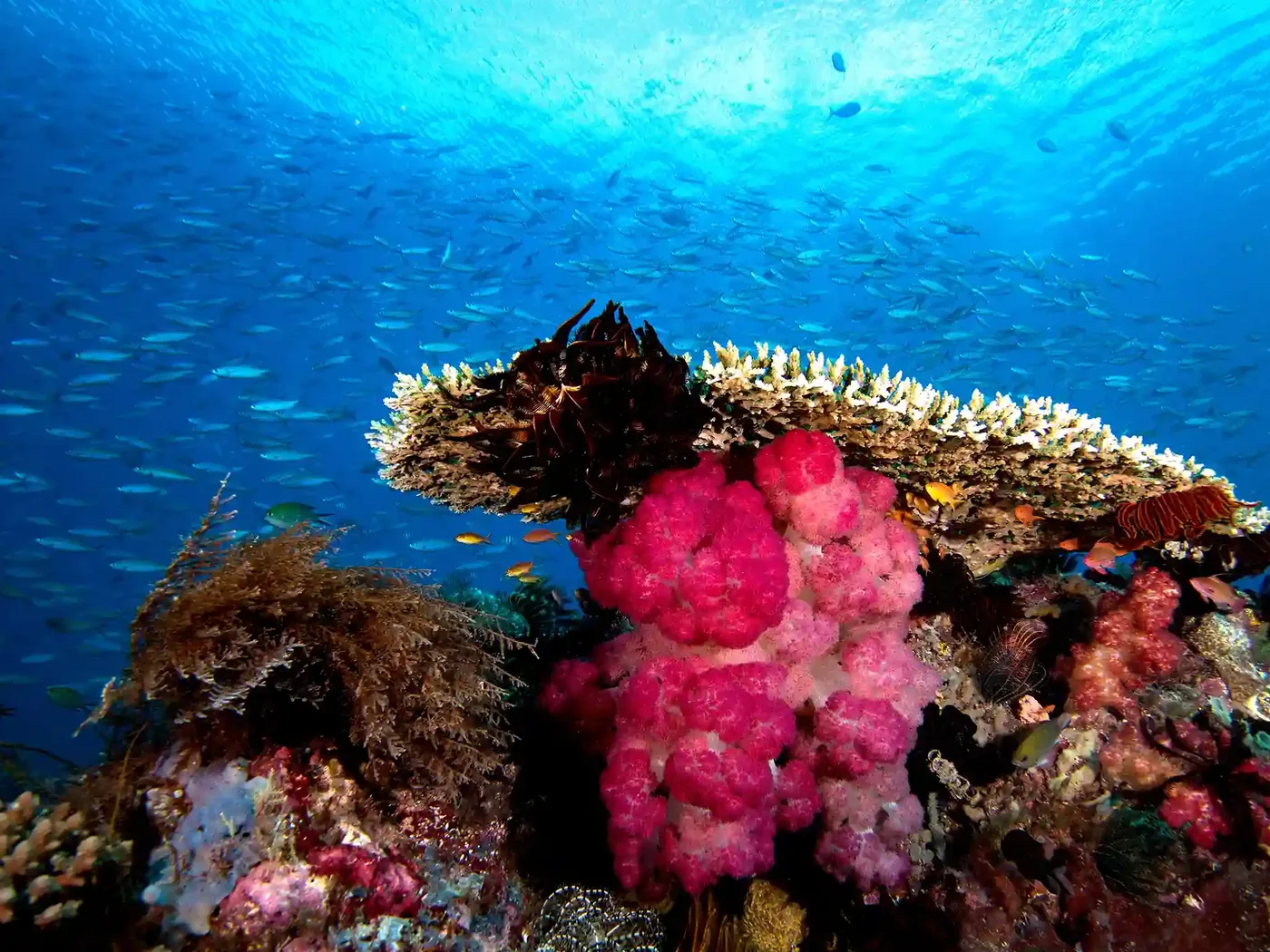
Most Alor diving splits between two moods. The Pantar Strait delivers adrenaline — walls, drop-offs and fast water where schooling fish and the occasional pelagic hang in the blue. Kalabahi Bay is a quiet volcanic muck arena for macro shooters.
Kal's Dream is the headline site. One documented scalloped-hammerhead spot drops to around 32 metres in very strong current, which is exactly why it demands good fitness. A longstanding Pantar resort reaches 40-plus sites within 30 to 45 minutes, so most trips sample both worlds.
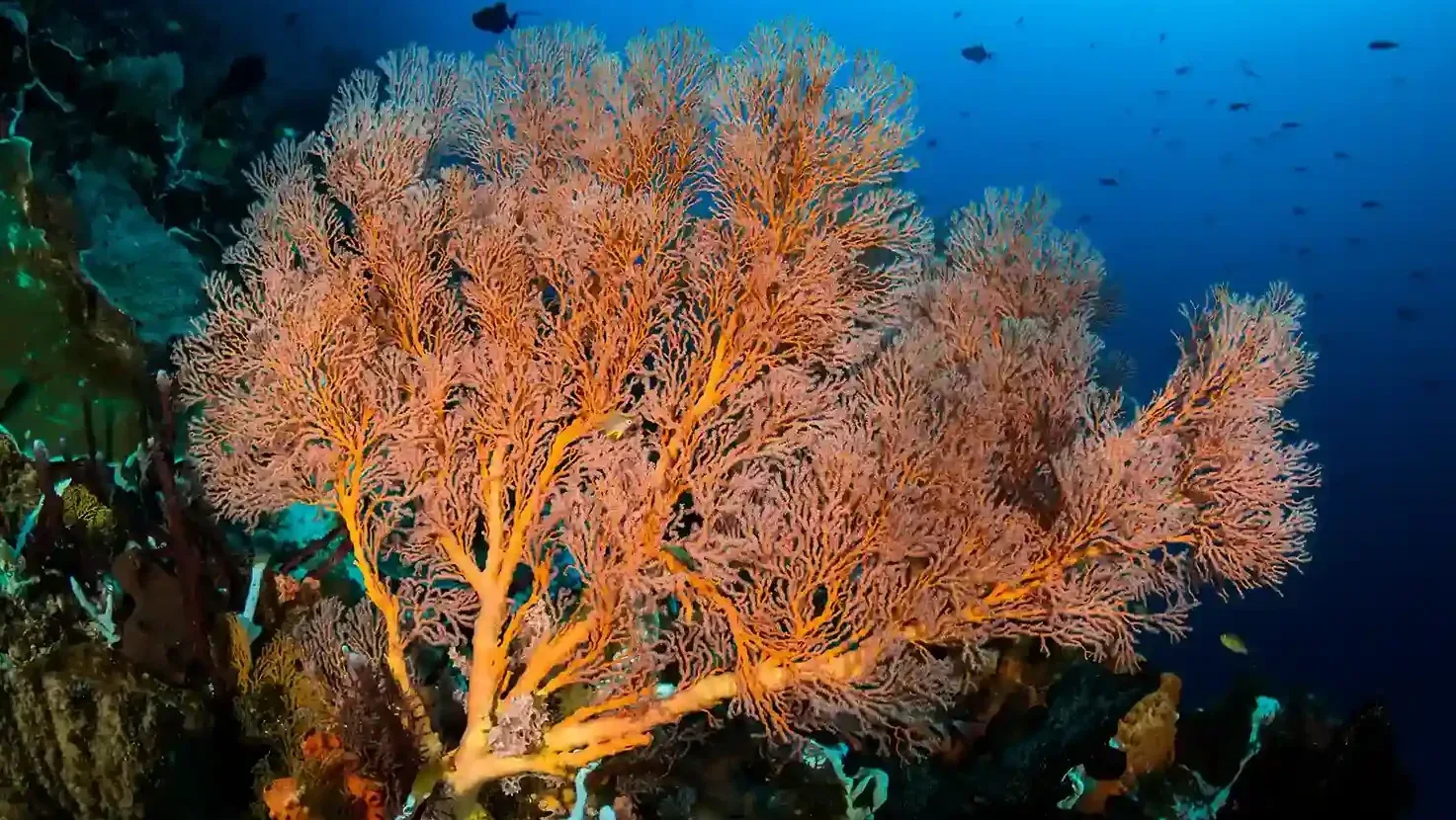
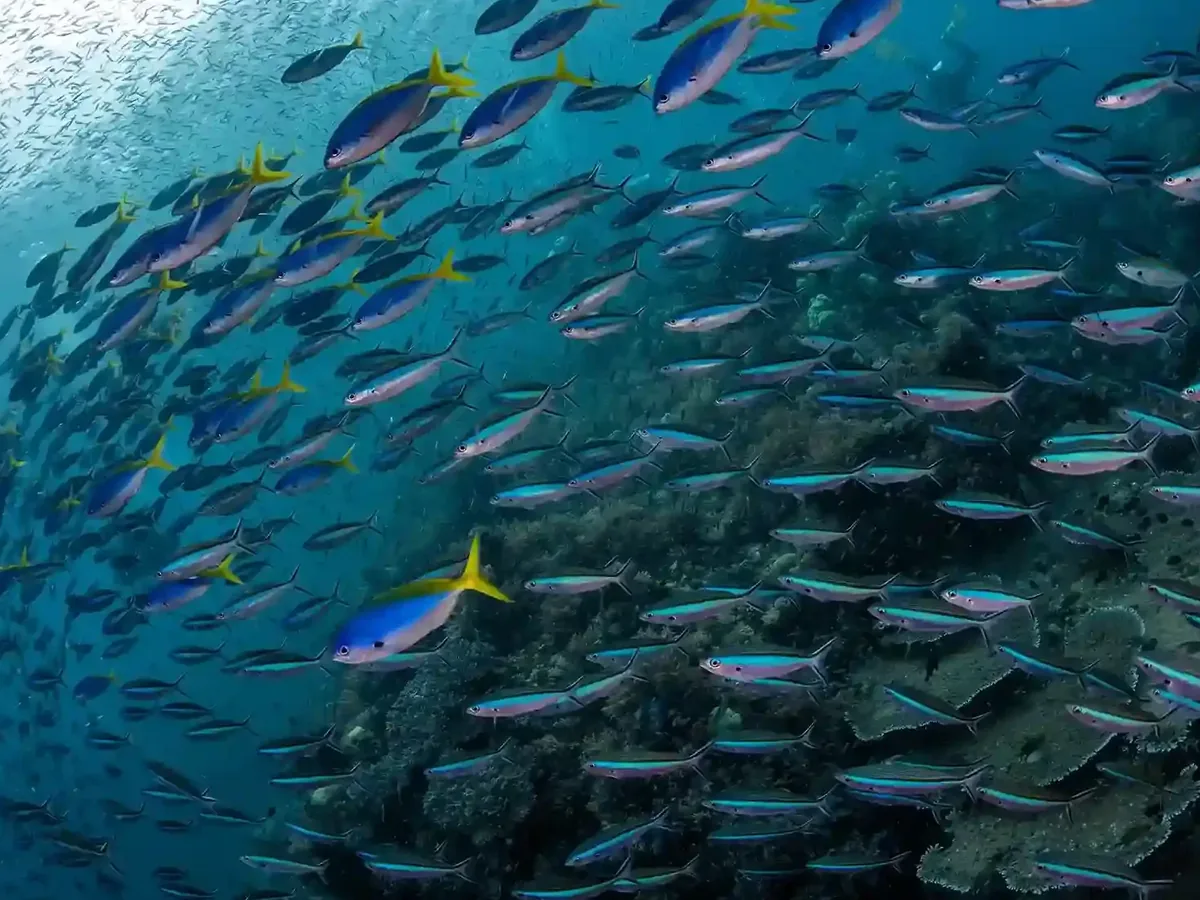
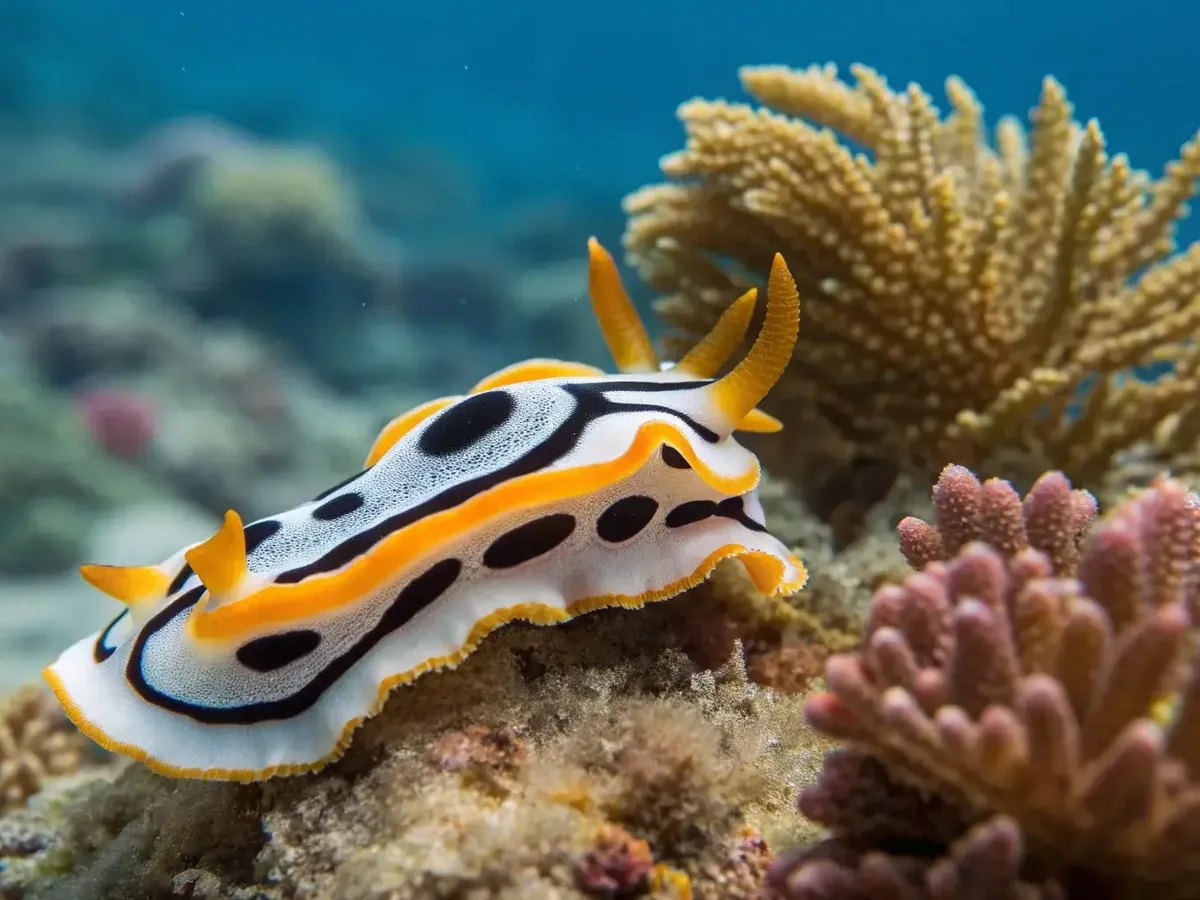
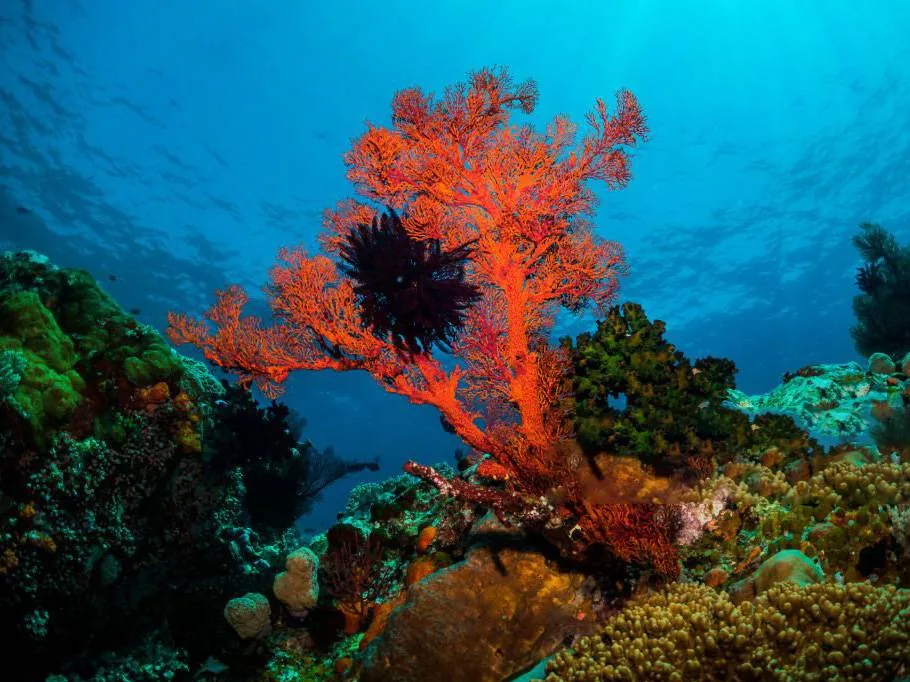
Three terrains
Black sand, gorgonian wall and open blue — the three surfaces every Alor itinerary is built from.
Site card
Depth and current bands are planning notes set at the pre-dive briefing, not fixed guarantees.
| Dive site | Zone | Typical depth | Current | Suited to |
|---|---|---|---|---|
| Kal's Dream | Pantar Strait | 15–32 m | Very strong | Advanced, fit divers |
| Pantar Strait walls | Pantar Strait | 15–25 m | Strong | Advanced |
| Twilight Zone | Pantar Strait | 15–25 m | Moderate–strong | Intermediate+ |
| Kalabahi Bay muck | Kalabahi Bay | 5–20 m | Mild | All certified levels |
| Pasir Merah, Pura Is. | North Pantar | 10–25 m | Moderate | Intermediate |
The calendar
The dry, calmer window runs April to November. Thermoclines can plunge some sites to 20°C or lower even when the surface is warm.
| Period | Water temp | Visibility | Currents | What to expect |
|---|---|---|---|---|
| Nov–Mar (rainy) | ~25–29°C | Often 15 m or less | Unsettled surface | Rain, murkier water; muck still good |
| Apr–May (shoulder) | ~25–31°C | 25–30 m | Moderate | Season opening, warming water |
| Jun–Oct (dry) | 31–32°C | Up to ~40 m | Strong | Best clarity; September best for mola mola |
| Oct–Nov (peak) | ~25°C | 25–30 m | Most prevalent | Big-water diving for experienced divers |
Plankton blooms from May to September can drop visibility to 15 metres, while the June-to-October dry season can open it to about 40.
Two formats
Land-based or liveaboard, then tailor from there.
Start here
Send your logbook and dates and we come back with a plan matched to both.
Inside the marine park
Alor's waters are a managed marine protected area and the rules are enforced. Fishing and spearfishing are off-limits to visitors, reserved for local fishermen.
Protected species include coral reefs, turtles, marine mammals, thresher sharks, mangroves, seagrasses and pelagic fish. In practice this keeps sites healthy, and it is why booking through licensed local operators matters.
Straight answers
Only partly. Operators accept PADI Open Water as a minimum for fun diving, but strongly recommend 50 to 100 logged dives before tackling the Pantar Strait's strong currents. Beginners are better suited to calmer Kalabahi Bay muck sites or a course, then building experience before attempting advanced drift dives like Kal's Dream.
Yes. Alor's waters are a marine protected area, so every diver must attend a mandatory briefing by MPA officers, pay a marine park fee and obtain a permit before any in-water activity. Diver numbers per site are capped by WWF carrying-capacity limits, and guides need special MPA certification beyond standard agency credentials.
A recognised entry-level certification such as PADI Open Water is the floor, with 50-plus logged dives recommended. DAN or equivalent dive-accident insurance is mandatory, not optional: the nearest hyperbaric chamber is in Bali, and evacuation plus chamber costs fall outside standard medical insurance. All dives are no-decompression, and solo diving is not permitted.
The Pantar Strait sites carry the fastest water, and Kal's Dream is the most demanding — a documented scalloped-hammerhead spot reaching around 32 metres in very strong current. Conditions peak in October and November, when currents are most prevalent. These sites require rapid descents, quick equalising and solid fitness.
Possibly, but never predictably. Alor's cool upwellings draw scalloped hammerheads, and blue whales pass through the region, yet neither can be scheduled. September is the reliable window for mola mola. Treat any pelagic encounter as a bonus, and be wary of anyone advertising guaranteed sightings on fixed dates.

Silo 2 · Dive styles & sites
Next step
Send your logbook and dates and we come back with a plan matched to both, arranged through a vetted, licensed Alor operator.