Dedicated photo guide
Paces dives for setup and holds subjects, rather than herding the group past them. Knows which sites suit a 60mm versus a fisheye that morning.
Silo 2 · Dive styles & sites
Photo-optimised expeditions pairing dedicated photo guiding with split macro and wide-angle days, camera rinse and charging stations, and an optional blackwater night.
Two disciplines
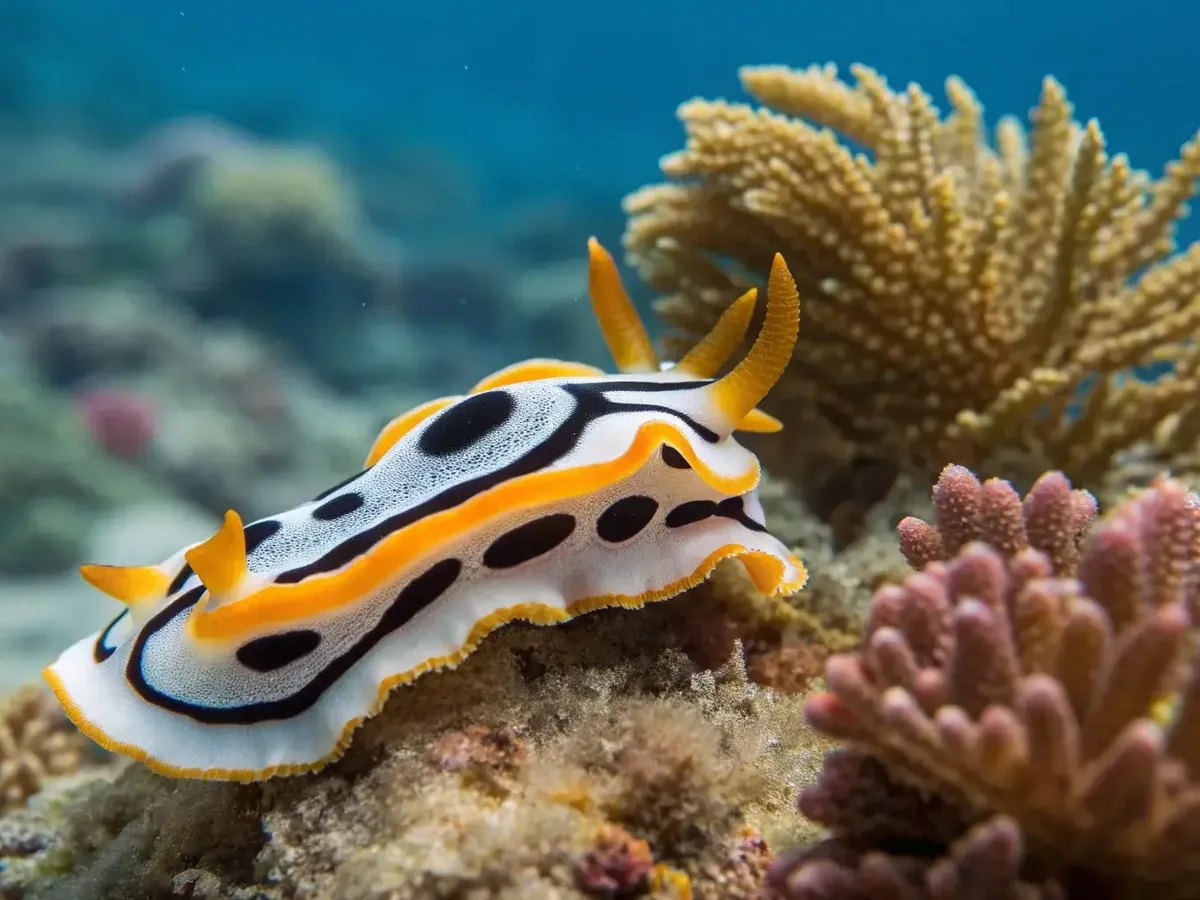
Kalabahi Bay is the macro engine. A volcanic black-sand muck site where mimic octopus, Pegasus sea moths, seahorses, frogfish and dense nudibranch life sit within a lens length of your dome. Because these critters don't roam far, the muck shooting holds up year-round.
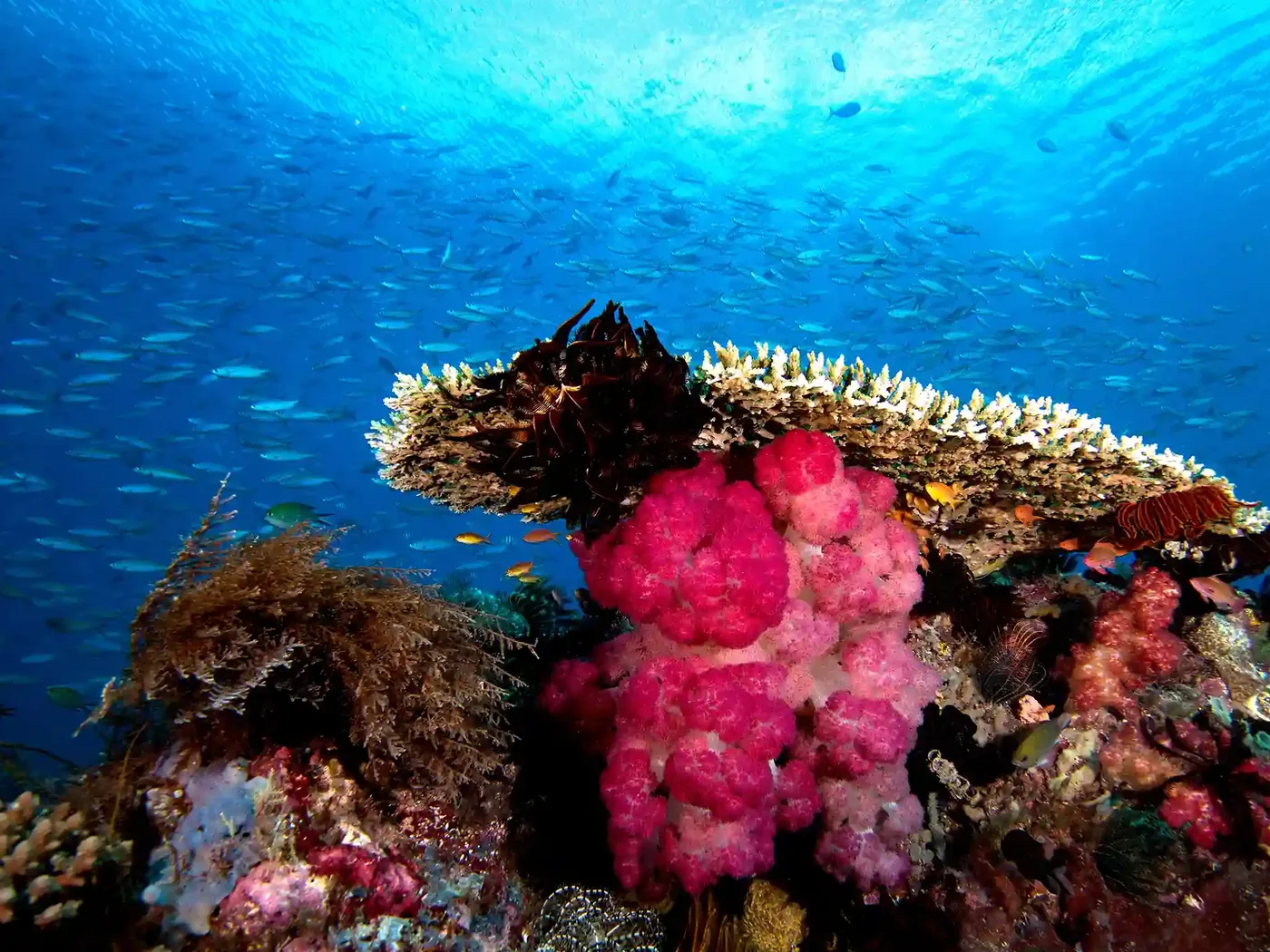
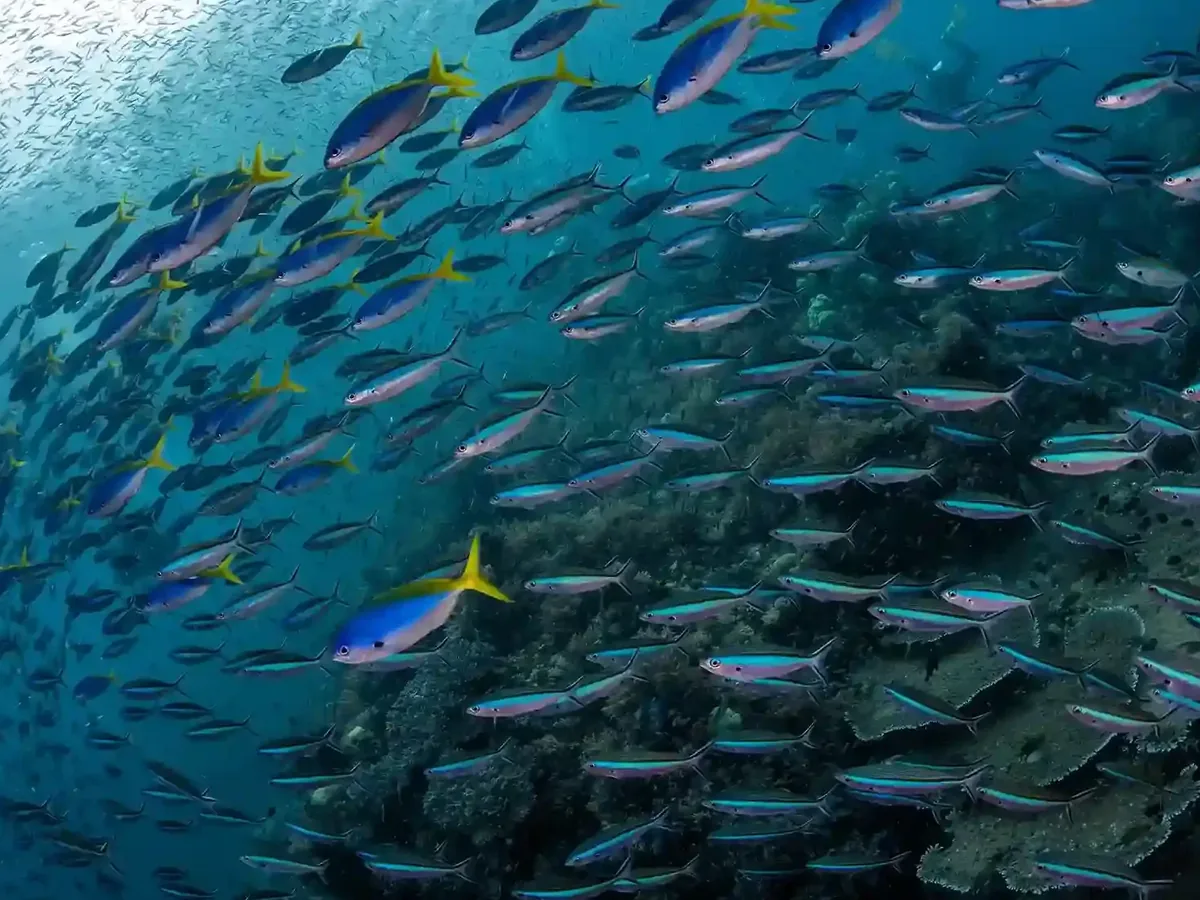
The Pantar Strait swings the other way. Strong-current walls draped in gorgonians, schooling fish, and open-water visitors — mola mola, dolphins, pilot whales and the occasional orca — reward a fisheye and a fast shutter. Blue whales and hammerheads pass through too, but we frame those as possible, never scheduled.
Split-focus is the point. Instead of a scattered lens on every dive, whole days are dedicated to one discipline so you rig once topside and shoot with intent underwater. Your photo guide paces each dive for setup and holds position on a subject long enough to compose.
Groups stay small: the representative land-based resort on Pantar caters to just 16 divers and reaches 40-plus sites within 30 to 45 minutes on small, quiet, low-emission boats.

Shooter's calendar
The dry season brings the clearest water; the same plankton blooms that cut visibility are what pull in the big animals.
| Window | Surface & currents | Water temp | Shooter's note |
|---|---|---|---|
| April–May | Season opening, settling surface | ~25°C | Macro plus first clean walls |
| June–October | Dry season, strongest conditions | 31–32°C to Sep | Peak wide-angle; September best for mola mola |
| October–November | Most prevalent currents | ~25°C | Pelagic-heavy walls, advanced drift work |
| November–March | Rainy, unsettled surface | Warmer, variable | Reduced viz above water; Kalabahi macro still delivers |
Thermoclines can drop some sites to 20°C or lower, so pack exposure protection accordingly.
On the boat
The difference between a dive trip you happen to shoot and a trip built for shooting.
Dives stay within no-decompression limits, 60-minute bottom time or a 50-bar turn, with solo diving not permitted.
Quoted per trip
No citable public price tables exist for Alor dive packages, liveaboards or the marine park fee. Final quotes come from your assigned licensed operator once dates and dive count are locked.
Quotes exclude flights, the marine park fee and MPA permit, DAN-style dive-accident insurance, and personal camera equipment.
Five steps
Everything that could stall a shoot gets confirmed in writing first.
Start here
Alor is remote and dedicated rental camera systems aren't reliably stocked locally. We confirm charging voltage and spare-part logistics before departure.
Non-negotiable
Every diver attends an MPA briefing, pays the marine park fee and holds a permit before entering the water.
We curate and arrange through vetted, licensed Alor operators. We do not own the boats or resort and never sell Komodo or Raja Ampat trips.
Straight answers
Bring your own housing, ports, strobes and spare batteries. Alor is remote, and dedicated rental camera systems aren't reliably stocked by local operators. We confirm charging voltage, rinse-tank access and spare-part logistics with your assigned operator before departure so nothing critical hinges on last-minute local supply.
Pack both if you can. Kalabahi Bay's black-sand muck demands a macro lens for its Pegasus sea moths, mimic octopus and nudibranchs, while the Pantar Strait's gorgonian walls and schooling pelagics call for wide-angle or fisheye. Split-focus itineraries dedicate whole days to each, so you swap ports topside rather than compromising underwater.
Yes, as an optional add-on arranged through licensed operators, weather and current permitting. Blackwater dives drift at night over deep water under lights to shoot larval and pelagic critters. Because Alor's currents run strong and the nearest hyperbaric chamber is in Bali, it is offered only to experienced shooters carrying valid DAN or equivalent dive-accident insurance.
Alor suits experienced divers. Operators require at least PADI Open Water for fun diving and recommend 50 to 100 logged dives for comfort in Pantar Strait currents, which demand rapid descents and regrouping near 5 metres. All dives stay within no-decompression limits, solo diving isn't allowed, and accident insurance is mandatory before you get in the water.
No, and we won't pretend otherwise. Blue whales and hammerheads move through Alor–Pantar seasonally, so encounters are possible but never predictable. October leans best for pelagic currents and September for mola mola, yet nothing about big-animal sightings is scheduled. We plan the wide-angle days to give you the best odds, not a promise.
Silo 2 · Dive styles & sites
Next step
Send your dates, camera setup and dive experience and we come back with a photo-expedition plan through a vetted, licensed Alor operator.