
Pantar Strait Wall Diving: A Complete Overview of Alor’s Gorgonian Walls
Pantar Strait wall diving means dropping fast onto sheer volcanic drop-offs draped in red and yellow gorgonian sea fans, then drifting along the wall while strong currents feed schooling fish, mola mola and passing pelagics. Sites suit experienced divers only, run best April through November, and demand quick descents to beat the surface pull.
The Pantar Strait, the channel separating Pantar and Alor in the eastern Lesser Sunda Islands of East Nusa Tenggara, sits inside the Coral Triangle — the richest marine region on the planet. Its walls are the draw: cool, current-fed vertical reefs where sea fans grow to the size of a doorway and the blue water beside you can hold anything from a passing dolphin pod to a mola mola.
This overview covers what those wall dives are actually like, how the current is handled, and when to come. All figures below are as of 2026-07-10 and subject to change.
Why do Pantar Strait walls dive differently from a reef?
A wall dive here is a drift dive first and a reef dive second. The same currents that make the strait demanding are what feed the filter-feeders — so the healthiest gorgonian forests grow exactly where the water moves hardest.
Expect these defining features:
- Vertical relief. Drop-offs plunge past recreational limits; most guided dives work the 15-25 m band where the fans are densest and the light still carries colour.
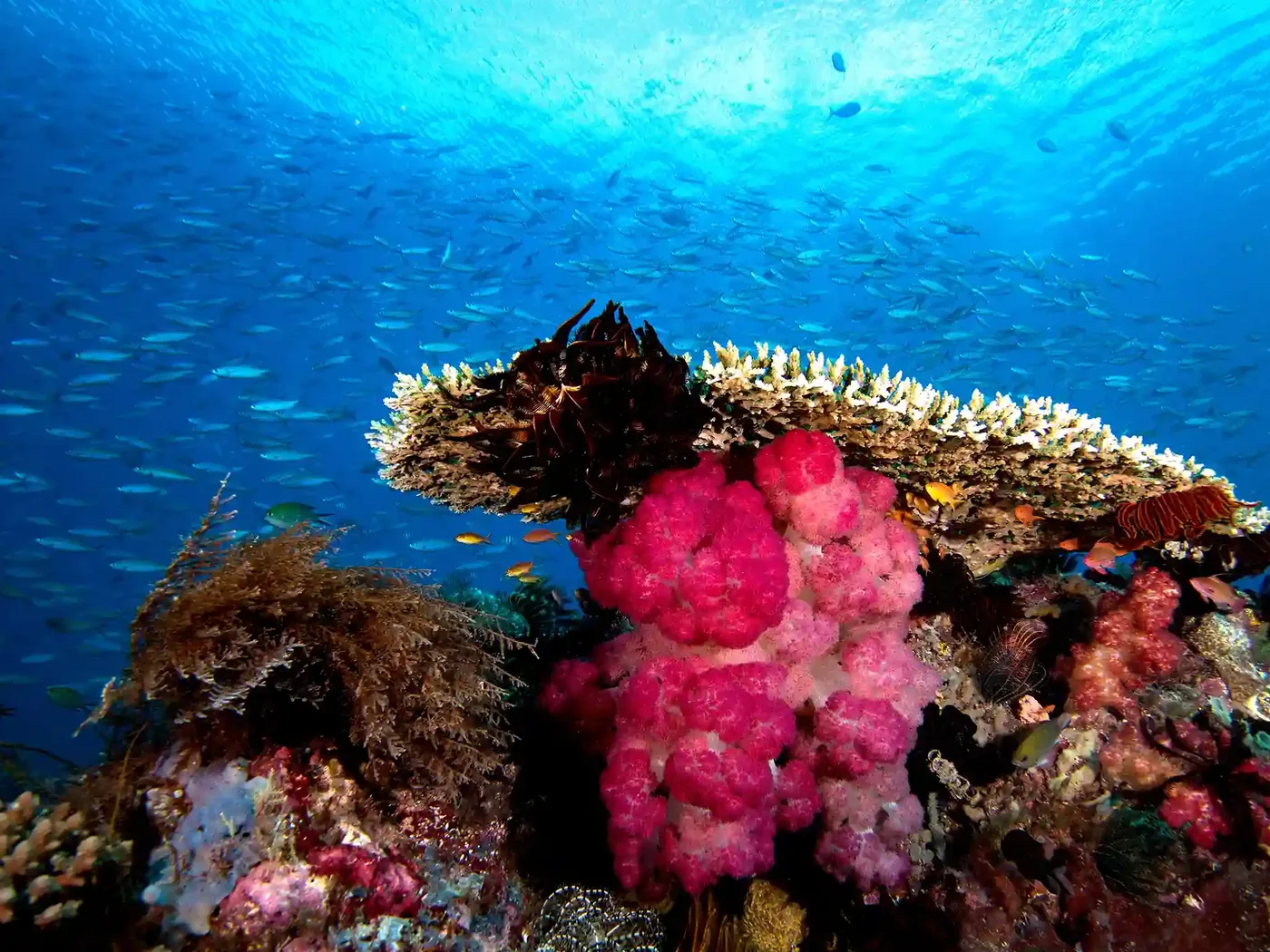
- Gorgonian and sea-fan walls. Large gorgonians and whip corals cover the vertical face, catching plankton in the flow.
- Wide-angle scenery. Pantar Strait sites favour wide-angle photography over macro — think schooling fusiliers and trevally, mola mola, dolphins, pilot whales and, on rare days, orcas moving through.
- Cool upwellings. Thermoclines can drop parts of a wall to 20 C or lower even when the surface is warm.
Because the terrain and the current are advanced, every dive should run with a guide who knows the site. Our curated Alor wall diving expedition packages pair each drop with a partner guide certified to lead inside the Alor marine protected area, on top of the mandatory briefing and permit the MPA requires of every visitor.
What are the signature Pantar Strait wall sites?
The strait and its surrounds hold dozens of sites within a short boat ride. A longstanding land-based resort on Pantar reaches 40-plus dive sites within 30-45 minutes by boat, and a small sample shows the range of wall and drift terrain.
| Site / area | Character | Typical depth | What you come for |
|---|---|---|---|
| Pantar Strait walls | Current-fed drift walls | 15-25 m | Gorgonian sea fans, schooling fish, wide-angle blue water |
| Pasir Merah (north of Pura Island) | Volcanic red-sand slope with gas vents | 15-25 m | Unusual red-sand backdrop; a Seven Seas Alor Sea liveaboard stop |
| Kalabahi Bay | Volcanic black-sand muck | Shallow to 25 m | Not a wall — macro contrast (Pegasus sea moths, mimic octopus, seahorses) |
| Deep hammerhead site | Steep wall / blue water | to ~32 m | Scalloped hammerheads in very strong current; strong fitness required |
The last two aren’t walls, but they explain why a Pantar trip mixes terrain — muck for macro on down days, the deep hammerhead site for the fit and experienced.
How do you manage the current on a Pantar wall dive?
The Pantar Strait carries strong surface currents, so the entry technique is non-negotiable: a rapid, near-negative descent, quick equalising on the way down, and a regroup with your guide at around 5 m before you settle onto the wall.
Once you’re on the face, the wall itself often shelters you and the drift becomes a controlled glide. Key rules that reputable Alor operators apply:
- All dives are no-decompression; solo diving is not allowed.
- Typical bottom-time limit is 60 minutes, or when a diver reaches 50 bar — whichever comes first.
- DAN (or equivalent) dive-accident insurance is mandatory, because the nearest hyperbaric chamber is in Bali and evacuation plus chamber costs sit outside standard medical cover.
When is the best time to dive Pantar’s walls?
Best conditions run April to November. October and November bring the most prevalent currents — excellent for pelagic action, harder for nervous divers. The rainy season, roughly November to March, brings unsettled surface, rain and reduced visibility.
| Window | Currents | Water temp | Visibility |
|---|---|---|---|
| Mar-Apr | Building | ~25 C | Variable |
| May-Sep (SE monsoon) | Moderate to strong | 31-32 C at surface | 25-30 m; can drop to 15 m or less in plankton blooms |
| Jun-Oct (dry) | Strong | Warm; thermoclines to 20 C | Up to ~40 m on clear days |
| Oct-Nov | Most prevalent | ~25 C | Strong pelagic odds |
September is the standout month to spot mola mola. Blue-whale and hammerhead encounters are possible, never predictable — treat any sighting as a bonus, not an itinerary promise.
What do you need to be ready for Alor wall diving?
Alor is for experienced divers. Operators typically ask for a minimum of PADI Open Water for fun diving, but recommend 50-100 logged dives for real comfort in the strait’s currents. Before any marine activity, every visitor must attend a briefing by MPA officers, pay the marine park fee and obtain a permit; diver numbers per site are capped by WWF-determined carrying capacity, and guides need special MPA certification on top of standard agency cards.
On pricing: there are no public, citable price tables for Alor dive packages, liveaboards or the marine park fee — only the fact that a fee and permit are required. Any prices Currentline Alor quotes are our own indicative 2026 commercial figures, subject to change, and never presented as sourced facts.
Where do you stay and dive the walls from?
Two models dominate. A longstanding land-based dive resort on Pantar caters to 16 divers in standard and deluxe bungalows built in local traditional style, runs small, quiet, low-emission boats, draws on its own underground water reserve, and reaches those 40-plus sites in 30-45 minutes. For a moving base, mainstream liveaboards such as a Seven Seas Alor Sea itinerary run seasonal September-October trips through Alor-Pantar, boarding at Kalabahi Bay and diving sites like Pasir Merah north of Pura Island.
Frequently Asked Questions
Are Pantar Strait wall dives suitable for beginners?
Not really. The walls are drift dives in strong surface current, needing a fast near-negative descent and a 5 m regroup before you reach the face. Operators accept PADI Open Water as a minimum but recommend 50-100 logged dives. Newly certified or nervous divers should build experience elsewhere first, then come back for the walls.
How deep are the gorgonian sea fans in the Pantar Strait?
Most guided wall dives work the 15-25 m band, where the largest gorgonians and sea fans grow densest and colour still carries. The walls themselves drop well past that, and one documented scalloped-hammerhead site reaches around 32 m in very strong current — but the signature fan scenery sits within standard recreational depths.
Do I need my own insurance to dive Pantar’s walls?
Yes. DAN or equivalent dive-accident insurance is mandatory on Alor, because the nearest hyperbaric chamber is in Bali. Evacuation and chamber costs are not covered by standard medical insurance, so operators require proof before you dive. Arrange it before arrival — as of 2026 this is a firm rule, not a formality.
More from the journal
Keep reading
Alor vs Komodo Liveaboard Costs: A 2026 Diver’s Breakdown
Alor liveaboards usually cost more per dive than Komodo ones for structural reasons: long crossings, heavy fuel burn and thin…
Alor–Pantar Strait Hyperbaric and Evacuation Logistics: A 2027 Safety Outlook
The nearest recompression chamber to the Alor–Pantar Strait sits in Bali, hundreds of kilometres and a multi-leg journey west, so…
Alor to Komodo Frontier Liveaboard Expeditions: A 2027 Route Outlook
An Alor-to-Komodo frontier liveaboard expedition strings together two of Indonesia's wildest dive regions in one crossing — current-swept Pantar Strait…
Community-Based Marine Conservation Projects in Alor: A 2027 Outlook
Community-based marine conservation in Alor centers on the Alor marine protected area (MPA) around Kalabahi Bay and the Pantar Strait,…
Alor and Forgotten Islands Combination Itineraries: A 2027 Crossing Guide for Photographers
A combination itinerary pairs Alor and Pantar's current-swept walls with the remote Forgotten Islands arc toward Banda — usually a…
Kupang Gateway Guide for Alor Divers: 2027 Group Logistics
Kupang — the East Nusa Tenggara provincial capital on Timor — is the practical mainland gateway for dive groups bound…