
Maumere to Alor Liveaboard Route Planning: 2027 Departure Windows & Gateways
Planning a Maumere-to-Alor liveaboard route means matching a September-October crossing with the right gateway flights: fly into Maumere’s Frans Seda Airport, board near town, then dive east through the Pantar Strait to disembark at Kalabahi in Alor. Book the boat and permits through a licensed operator months ahead, because the season is short.
Why does the Maumere-to-Alor corridor make sense as a liveaboard route?
Maumere sits on the north coast of Flores, in the Sikka Regency of East Nusa Tenggara. Alor and Pantar lie further east, in the same eastern Lesser Sunda chain, inside the Coral Triangle — one of the richest patches of marine biodiversity on the planet. A liveaboard linking the two threads a line through open passages, volcanic islands, and the current-swept Pantar Strait.
The appeal is coverage. A single crossing strings together muck sites, gorgonian walls, and the wide-angle drama of the strait without returning to the same harbour every night. Currentline Alor arranges these crossings as an independent concierge, matching your dates to licensed operators who run the Alor-Pantar season — never selling boats we don’t own. For the boat-by-boat options and cabin details, see our guide to Alor liveaboard expeditions.
One honest caveat up front: direction varies. Some itineraries board at Maumere and finish at Kalabahi in Alor; others reverse it. As of 2026, a number of mainstream boats — a Seven Seas Alor Sea itinerary among them — board at Kalabahi Bay and run the strait in the September-October window. The concierge job is fitting your flights to whichever way the operator sails that season.
When should you plan to depart?
Best conditions run April through November. October and November bring the most prevalent currents, which is exactly what pulls schooling fish and pelagics along the strait — and exactly why Alor is for experienced divers. September is the single best month to hope for a mola mola sighting. The rainy season, roughly November to March, brings unsettled surface, rain, and thinner visibility, so most crossings pause.
Water and visibility shift across the season, too. Water sits near 25°C in March-April and October-November, then climbs to 31-32°C from May to September under the southeast monsoon; thermoclines can still drop some sites to 20°C or lower. Visibility normally runs 25-30 m, but May-September plankton blooms can cut it to 15 m or less, while the dry months of June to October can open it up to around 40 m.
| Month window | What to expect | Planning note |
|---|---|---|
| April–May | Season opening; water warming ~25→31°C, currents settling | Quieter boats, fewer crossings on the calendar |
| June–August | Dry season, visibility up to ~40 m, water 31–32°C | Strong all-round diving; wide-angle in the strait |
| September | Best month to hope for mola mola; crossings begin | High demand — reserve early |
| October–November | Most prevalent currents; classic Alor-Pantar window | Prime pelagic hope; experienced divers |
| December–March | Rainy season, unsettled surface, visibility can drop to 15 m | Most crossings pause |
Blue-whale and hammerhead encounters belong in the “possible, not scheduled” column. Nobody can promise them, and any honest planner frames them as a hope, not a fixture of the itinerary.
How do you reach Maumere and leave from Alor?
This is where route planning earns its keep. The two ends of the corridor have very different air links, and the exit from Alor is the tighter one.
Maumere’s Frans Seda Airport takes connections through Denpasar in Bali or Kupang in West Timor. Alor’s airport at Kalabahi is smaller, with limited flights that generally route back through Kupang. A one-way liveaboard therefore usually means flying in through one hub and out through another — so build spare time around the flight that matters most.
| Leg | Typical routing (as of 2026) | Planning note |
|---|---|---|
| Into Maumere | Denpasar (Bali) or Kupang → Frans Seda Airport (MOF) | Sleep a night before boarding |
| Out of Alor | Kalabahi (Mali Airport, ARD) → Kupang → onward hub | Limited flights; leave a buffer day |
| Reverse routing | Some boats board Kalabahi, finish near Maumere | Direction set by the operator’s season schedule |
Two planning habits save trips as of 2026. First, sleep a night at your boarding town before departure; a missed connection shouldn’t cost you the boat. Second, leave a buffer day after disembarking in Alor, because thin flight schedules out of Kalabahi don’t forgive same-day onward bookings.
What does a typical Maumere-to-Alor crossing cover?
Expect a mix of dive styles rather than one signature site repeated. Kalabahi Bay, at the Alor end, is a volcanic black-sand muck-diving hotspot — Pegasus sea moths, mimic octopus, seahorses, nudibranchs, and frogfish for macro shooters. Because those critters don’t travel far, muck diving there holds up year-round.
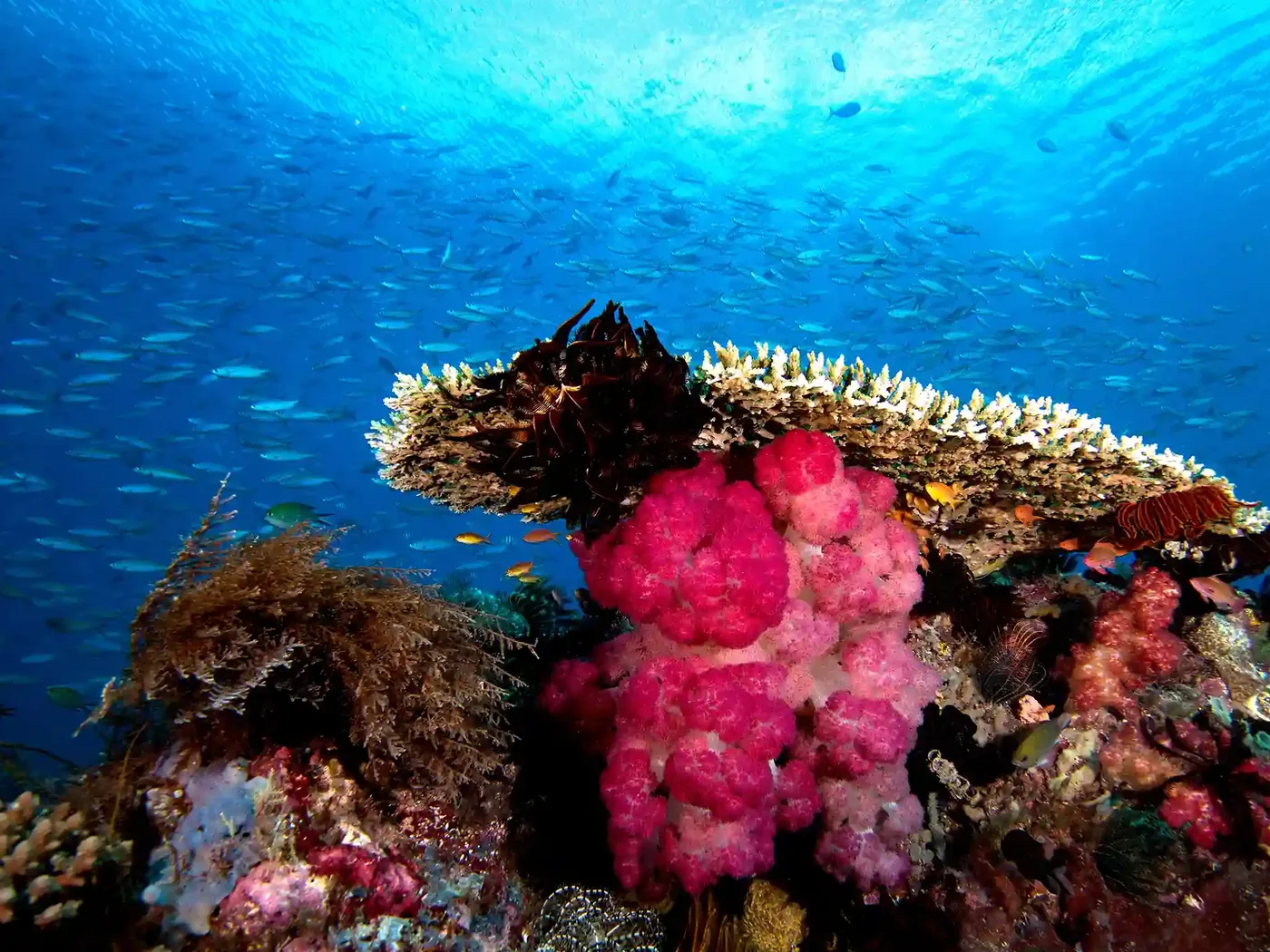
The Pantar Strait itself favours wide-angle: schooling fish, mola mola, dolphins, pilot whales, and the occasional orca. Sites like Pasir Merah, a volcanic red-sand slope with gas vents north of Pura Island, show up on the September-October crossings. Currents here are strong enough to demand a rapid descent, quick equalising, and a regroup around 5 m — plan your fitness and your dive count accordingly.
What does the 2027 outlook look like?
Treat this as an outlook, not a prediction. Through 2026, interest in Alor as Indonesia’s “next frontier” has been climbing while the crossing season stayed short — a narrow September-October core for the mainstream boats. Two dated signals point toward tighter planning for 2027: the season windows haven’t widened, and demand talk around Alor keeps rising.
The practical read for 2027 planners:
- Book the boat and the flights that bracket it earlier than you would for Komodo or Raja Ampat, where sailings run far more often.
- Keep your dates flexible by a few days, since operators finalise Alor-Pantar schedules season by season.
- Don’t count on new direct air links; plan around the Denpasar and Kupang hubs that exist today.
None of this is a guarantee. Schedules, fares, and operator line-ups can all change, and every figure here is indicative as of 2026.
What do you need before you board?
Alor’s waters are a managed marine protected area, and the rules are not optional. Every diver must attend a mandatory briefing by MPA officers, pay a marine park fee, and hold a permit before any marine activity. Diver numbers per site are capped by WWF-determined carrying capacity, guides need special MPA certification on top of standard agency certs, and fishing or spearfishing by visitors is prohibited.
Bring the paperwork, too. Minimum PADI Open Water is typical for fun diving, with 50-100 logged dives recommended for comfort in the strait’s currents. All dives are no-decompression, solo diving isn’t allowed, and DAN (or equivalent) dive-accident insurance is mandatory — the nearest hyperbaric chamber is in Bali, and evacuation and chamber costs sit outside standard medical cover.
On price: there’s no public, citable rate card for these crossings, the marine park fee, or permits. Any numbers Currentline Alor quotes are our own indicative commercial figures, dated 2026 and subject to change — never presented as sourced facts, and never tied to a guaranteed outcome.
Frequently Asked Questions
How many days does a Maumere-to-Alor liveaboard crossing usually take?
It varies by operator and isn’t fixed. As of 2026, mainstream Alor-Pantar crossings cluster in the September-October window and run as multi-day one-way trips between the two ends. Because schedules are set season by season, confirm the exact night count with the licensed boat before you book flights.
Should I fly into Maumere or Kalabahi first?
It depends on which way your chosen boat sails. Some itineraries board at Maumere’s Frans Seda Airport side; others board at Kalabahi Bay in Alor and finish near Maumere. Confirm the direction first, then book your inbound flight to the boarding town and your outbound from the other end.
Can I add extra dive days on land before or after the crossing?
Yes, and it’s a common way to beat thin flight schedules. A land-based dive resort on Pantar caters to 16 divers and reaches 40-plus sites within 30-45 minutes by boat, while Kalabahi Bay’s muck diving holds up year-round. Currentline arranges these add-ons through licensed local partners around your liveaboard dates.
More from the journal
Keep reading
Alor vs Komodo Liveaboard Costs: A 2026 Diver’s Breakdown
Alor liveaboards usually cost more per dive than Komodo ones for structural reasons: long crossings, heavy fuel burn and thin…
Alor–Pantar Strait Hyperbaric and Evacuation Logistics: A 2027 Safety Outlook
The nearest recompression chamber to the Alor–Pantar Strait sits in Bali, hundreds of kilometres and a multi-leg journey west, so…
Alor to Komodo Frontier Liveaboard Expeditions: A 2027 Route Outlook
An Alor-to-Komodo frontier liveaboard expedition strings together two of Indonesia's wildest dive regions in one crossing — current-swept Pantar Strait…
Community-Based Marine Conservation Projects in Alor: A 2027 Outlook
Community-based marine conservation in Alor centers on the Alor marine protected area (MPA) around Kalabahi Bay and the Pantar Strait,…
Alor and Forgotten Islands Combination Itineraries: A 2027 Crossing Guide for Photographers
A combination itinerary pairs Alor and Pantar's current-swept walls with the remote Forgotten Islands arc toward Banda — usually a…
Kupang Gateway Guide for Alor Divers: 2027 Group Logistics
Kupang — the East Nusa Tenggara provincial capital on Timor — is the practical mainland gateway for dive groups bound…