
Alor Current-Driven Wall Diving Itineraries: A 2027 Planning Guide
Current-driven wall diving in Alor is engineered around three levers: the lunar cycle that drives tidal flow, fast negative-entry descents onto the gorgonian wall, and tight group cohesion regrouped at around 5 metres. Plan April to November, dive only with MPA-certified guides, and treat October’s currents as the strongest of the year.
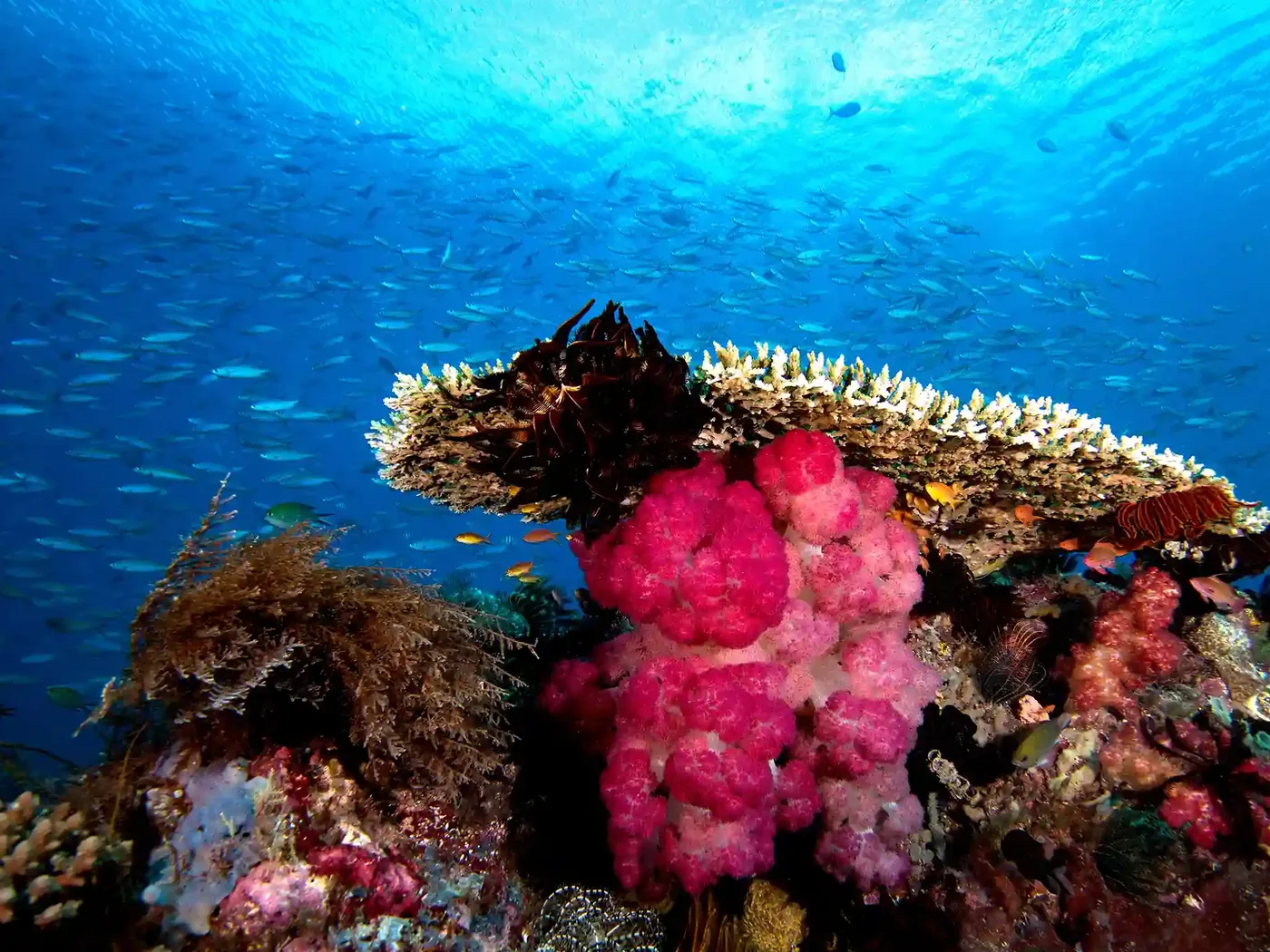
Alor and Pantar sit at the eastern edge of the Lesser Sunda Islands in East Nusa Tenggara, deep inside the Coral Triangle — an area of exceptionally high marine biodiversity. The walls here are steep, gorgonian-draped, and swept by some of the strongest surface currents in Indonesia. That is exactly why an Alor wall itinerary cannot be booked like a calm-water reef holiday. It has to be built around water movement.
Currentline Alor works as an independent dive-travel concierge, arranging these expeditions through licensed established Alor operators such as Dive Alor Dive, Nautika Dive Alor and Alami Alor. We do not run boats ourselves. What we do is engineer the schedule — matching your logged experience, the moon, and the tide tables to the right walls on the right days. If you want the full structure and inclusions, see our wall diving expedition packages, then use the itinerary logic below to understand how the days are actually sequenced.
What makes an Alor wall itinerary different from a normal dive trip?
Two things: the current, and the rules.
The Pantar Strait funnels tidal flow between islands, producing strong surface currents that demand a rapid descent, quick equalising, and a regroup around 5 metres before the group moves as a unit. According to established Alor operators, most wall dives run 15–25 metres, all on no-decompression profiles, with solo diving not allowed and a typical bottom-time limit of 60 minutes or when a diver reaches 50 bar.
The rules come from Alor’s status as a marine protected area (MPA). Every diver must attend a mandatory briefing by MPA officers, pay a marine park fee, and hold a permit before any marine activity. Guides need special MPA certification on top of standard agency cards, and WWF-determined carrying capacity caps how many divers a single site takes per day. A good itinerary is built around those caps, not against them.
How does the moon phase shape a current-driven wall itinerary?
Tidal range tracks the lunar cycle, and tidal range drives current speed. Around new and full moons, spring tides push the fastest water; around the quarter moons, neap tides ease off. Wall itineraries are sequenced so the most demanding, high-flow drift walls land on days you can handle, and gentler profiles fall on spring-tide peaks if the group is mixed.
| Moon phase | Tidal behaviour | Typical current | Itinerary use |
|---|---|---|---|
| New / full moon | Spring tides, largest range | Strongest drift | Fast wall drifts for 50+ dive divers; time slack windows |
| First / last quarter | Neap tides, small range | Milder flow | Muck and macro days; skills refresh; mixed-ability groups |
| 2–3 days after new/full | Range easing | Moderate | Signature gorgonian walls at their most forgiving |
This is planning, not prophecy. Tide tables give a strong signal, but wind, thermoclines and real conditions on the day always overrule the calendar — which is why every serious Alor day starts with the guide reading the water, not the itinerary.
What does a well-engineered descent and regroup look like?
On a current-swept wall, the descent is the dive. A mistimed entry scatters a group across open water. The engineered version looks like this:
- Negative entry: roll in with no air in the BCD and descend immediately — no surface float in the current.
- Fast equalising: clear early and often on the way down; the group targets the reef top, not mid-water.
- 5-metre regroup: everyone gathers around 5 metres, confirms buddies, then moves along the wall together.
- Reef hook or fingers, where permitted: hold position against flow to watch pelagics pass without kicking up the reef.
- Drift as a unit: the guide leads, the group stays in a tight arc, and no one races ahead into a down-current.
How do you keep group cohesion when the current rips?
Cohesion is the single biggest safety and experience factor on these walls. Because sites are capped and current is strong, Currentline arranges small groups matched by experience — established operators recommend 50–100 logged dives for comfort in Alor-Pantar, even though the minimum for fun diving is PADI Open Water.
Practical cohesion levers we build into the plan:
- Ability-banded groups so fast and cautious divers are not forced onto the same wall on the same tide.
- A briefed regroup depth and lost-buddy plan for every single dive, not just day one.
- A 60-minute or 50-bar ceiling that ends the dive on a rule, not on someone’s optimism.
- DAN (or equivalent) dive-accident insurance, which is mandatory — the nearest hyperbaric chamber is in Bali, and evacuation and chamber costs sit outside standard medical cover.
What does a 2027-forward Alor wall week look like?
Here is how an itinerary sequences across a typical week, written as an outlook rather than a fixed promise. Conditions as of 2026 (subject to change): best diving April–November, with October–November carrying the most prevalent currents; visibility normally 25–30 metres, up to roughly 40 metres in the June–October dry season and sometimes below 15 metres during May–September plankton blooms; water around 25°C in October–November, warmer at 31–32°C from May–September, with thermoclines that can drop a site to 20°C or lower.
| Day | Focus | Why it sits here |
|---|---|---|
| 1 | Check-out + MPA briefing | Permit, fee, and a shallow skills dive before any wall |
| 2 | Signature gorgonian wall | Build confidence on a moderate-tide wall |
| 3 | High-flow drift wall | Placed on the day the tide and group both allow it |
| 4 | Kalabahi Bay black-sand muck | Neap or surface-blown day; macro stays good year-round |
| 5 | Best wall of the trip | Reserved for the strongest predicted conditions |
Nearby land-based resorts on Pantar reach 40-plus dive sites within 30–45 minutes by boat, which keeps this kind of day-by-day re-routing genuinely possible when the water changes.
What is the honest 2027 outlook?
Search interest in Alor as Indonesia’s “next frontier” has been climbing through 2026, and that momentum points toward more 2027 demand for the September–October pelagic window, when mainstream liveaboards run Alor Sea itineraries boarding at Kalabahi Bay. That is an outlook, not a prediction. Blue-whale and hammerhead encounters remain possible, never guaranteed — one documented scalloped-hammerhead site sits around 32 metres in very strong current and demands real fitness. Any prices we quote are Currentline / Bali Premium Trip’s own indicative 2026 figures, subject to change, never presented as sourced facts, with no guaranteed outcomes.
Frequently Asked Questions
Do I need to time my Alor wall itinerary to the moon, or can I book any week?
You can book any week in the April–November window, but the moon shapes the days. New and full moons bring spring tides and the strongest drift; quarter moons ease off. Currentline sequences your demanding walls around your experience and the tide, so the schedule flexes even if your travel dates are fixed.
How many logged dives do I really need for Alor’s current-driven walls?
The legal minimum for fun diving is PADI Open Water, but established Alor operators recommend 50–100 logged dives for genuine comfort in Pantar Strait currents. Fewer than that and you are placed on gentler tides and moderate walls first. Fast negative-entry descents and holding position in flow reward recent, current experience over raw certification level.
What happens to the itinerary if the current or visibility turns bad on the day?
The guide reads the water first and re-routes. A blown-out wall becomes a Kalabahi Bay muck day, where macro critters stay good year-round because they do not travel far. With 40-plus sites within 30–45 minutes by boat, a strong Alor plan always carries alternatives — the calendar proposes, but real conditions decide.
More from the journal
Keep reading
Alor vs Komodo Liveaboard Costs: A 2026 Diver’s Breakdown
Alor liveaboards usually cost more per dive than Komodo ones for structural reasons: long crossings, heavy fuel burn and thin…
Alor–Pantar Strait Hyperbaric and Evacuation Logistics: A 2027 Safety Outlook
The nearest recompression chamber to the Alor–Pantar Strait sits in Bali, hundreds of kilometres and a multi-leg journey west, so…
Alor to Komodo Frontier Liveaboard Expeditions: A 2027 Route Outlook
An Alor-to-Komodo frontier liveaboard expedition strings together two of Indonesia's wildest dive regions in one crossing — current-swept Pantar Strait…
Community-Based Marine Conservation Projects in Alor: A 2027 Outlook
Community-based marine conservation in Alor centers on the Alor marine protected area (MPA) around Kalabahi Bay and the Pantar Strait,…
Alor and Forgotten Islands Combination Itineraries: A 2027 Crossing Guide for Photographers
A combination itinerary pairs Alor and Pantar's current-swept walls with the remote Forgotten Islands arc toward Banda — usually a…
Kupang Gateway Guide for Alor Divers: 2027 Group Logistics
Kupang — the East Nusa Tenggara provincial capital on Timor — is the practical mainland gateway for dive groups bound…