
East Nusa Tenggara Sustainable Dive-Tourism Investments: A 2027 Outlook
Sustainable dive-tourism economics in East Nusa Tenggara now hinge on scarcity by design: Alor’s marine protected area caps divers per site, mandates permits and fees, and rewards low-impact operators. Heading into 2027, that engineered scarcity — not raw volume — is the value signal worth watching. Treat what follows as outlook, not prediction.
What is really driving the sustainable dive-tourism conversation in East Nusa Tenggara?
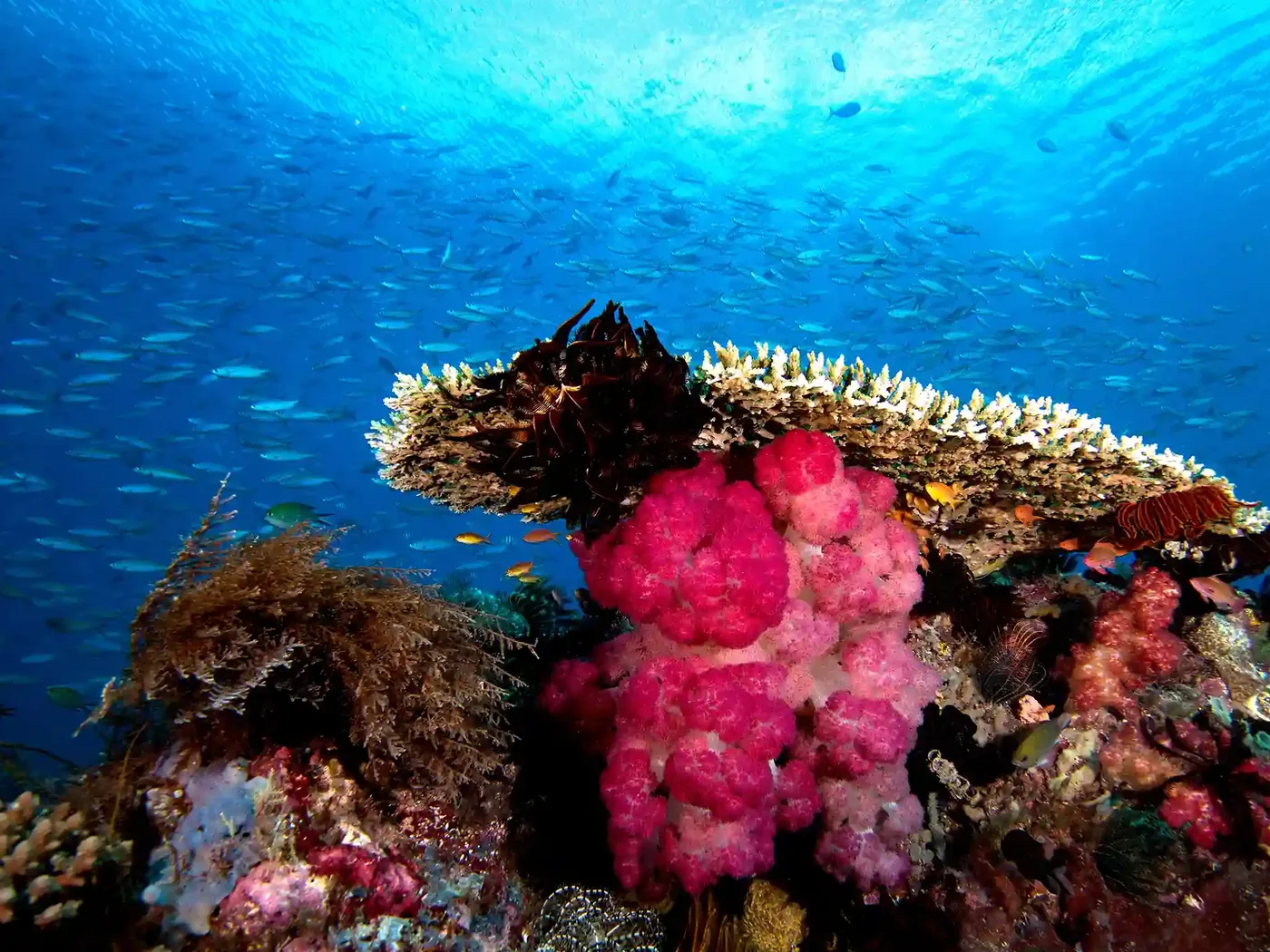
East Nusa Tenggara sits in the eastern Lesser Sunda Islands, and Alor with neighbouring Pantar falls inside the Coral Triangle — an area recognised for exceptionally high marine biodiversity. That biology is the asset. As of mid-2026, interest in Alor as one of Indonesia’s “last untouched” dive frontiers keeps climbing, while Komodo and Raja Ampat still carry the mainstream traffic.
The economics follow the biology. When a reef system is both rare and protected, the way money moves through it changes. Volume tourism erodes the very thing visitors pay to see: dramatic gorgonian walls, world-class macro, and seasonal chances at blue whales and hammerheads. So the sustainable-tourism question in ENT is less about marketing language and more about a hard limit — how many divers the water can carry before the product degrades.
Read the rest as an outlook grounded in dated 2026 signals, not a forecast, and never a promise of financial returns.
How do Alor’s marine-park rules turn conservation into economics?
Alor’s waters are managed as a marine protected area (MPA), and the rules are specific. As of 2026, every diver, snorkeller and marine tourist must attend a mandatory briefing by MPA officers, pay a marine park fee, and hold a permit before any in-water activity. Minimum experience levels apply. Guides need special certification to work inside the MPA on top of standard agency cards. Crucially, diver numbers per site are capped by a carrying capacity determined with WWF input, and fishing or spearfishing by visitors is prohibited outright, reserved for local fishermen.
Each of those rules is a cost input and a supply limit at the same time. A hard cap on divers per site means the number of premium slots is finite by design, which is the structural backdrop to any [Alor diving expedition pricing](/alor-diving-expedition-prices/) you compare. Scarcity here is not a sales trick; it is written into the permit system. That distinction matters when you weigh whether a destination’s economics are durable or built on a boom that overcrowding will unwind.
Where does sustainability actually show up in the value stack?
Sustainable operations in Alor are not abstract. They appear as concrete choices that separate durable operators from opportunistic ones. A longstanding land-based dive resort on Pantar, for example, caps itself at 16 divers, runs small quiet low-emission boats, draws on its own underground water reserve, and reaches more than 40 dive sites within 30 to 45 minutes by boat. Currentline Alor works strictly as an independent concierge, arranging trips through vetted licensed Alor operators rather than owning boats, so these are features to look for, not claims we make about our own hardware.
| Sustainability feature | What it costs or constrains | Why it holds value into 2027 |
|---|---|---|
| Per-site diver cap (WWF carrying capacity) | Finite premium slots per day | Protects reef quality; blocks oversupply |
| Mandatory permit + marine park fee | Added per-trip cost | Funds enforcement; filters casual volume |
| MPA-certified guides | Higher crew cost | Scarce skilled labour; safety in strong current |
| Low-emission boats, own water reserve | Higher capex and opex | Lower footprint; resilience on remote islands |
| DAN dive-accident insurance requirement | Mandatory diver cost | Nearest chamber is Bali; risk is priced in |
Read the table as a filter. Operators that skip these inputs may look cheaper, but they are competing on a model the MPA framework is designed to squeeze out.
What did 2026 actually signal about the road into 2027?
The honest position is that Alor is early. There is no citable price index, no published visitor-count series, and no guaranteed trajectory. What exists are dated conditions and rules that point in a direction. The table below reads 2026 signals into a 2027 outlook — again, an interpretation, not a prediction.
| 2026 signal (as of 2026-07-10) | Outlook read for 2027 (not a prediction) |
|---|---|
| Rising “last untouched gem” search interest | Demand pressure may build before mainstream awareness catches up |
| Carrying-capacity caps already enforced | Supply stays constrained; slots do not scale with demand |
| Seasonal liveaboards cluster in the Sep-Oct window | Peak-window competition for berths likely intensifies |
| No public, citable price tables for packages or fees | Pricing stays operator-set and opaque; compare offers carefully |
| Muck diving good year-round in Kalabahi Bay | Off-peak value cushions the strong seasonality of pelagic trips |
That last row matters for economics. Kalabahi Bay is a volcanic black-sand muck-diving hotspot for macro shooters — Pegasus sea moths, mimic octopus, seahorses, nudibranchs, frogfish — and because these critters do not travel far, the muck stays reliable through the calendar. Best overall conditions run April to November, with October and November bringing the most prevalent currents, so a destination that only sells the peak pelagic window leaves value on the table.
Where does expedition pricing fit, honestly?
No current, citable IDR or USD price table exists publicly for Alor dive packages, liveaboards, or the marine park fee itself — only the documented fact that a fee and permit are required. Mainstream liveaboards, such as a Seven Seas Alor Sea itinerary, run seasonal trips through the September-October window, boarding at Kalabahi Bay and diving sites like Pasir Merah, a volcanic red-sand slope with gas vents north of Pura Island. What those cost is set by each operator, not by any open index.
Any figures on this site are Currentline Alor and Bali Premium Trip’s own indicative commercial data, dated as of 2026 and subject to change, never presented as sourced facts. Dive tourism carries no guaranteed returns or outcomes, and nothing here is financial, legal or tax advice. The point of the outlook is narrower and more useful: in a capped, permitted, insurance-required system where the nearest hyperbaric chamber is in Bali, price reflects genuine scarcity and real operating cost — which is exactly why lowball offers deserve a second look.
Frequently Asked Questions
Does Alor’s per-site diver cap push expedition prices up over time?
It can, but the mechanism is scarcity, not inflation for its own sake. As of 2026, carrying capacity limits divers per site, so premium slots are finite while interest grows. That structural tightness tends to support pricing rather than erode it. Still, no public price series exists, so treat any upward expectation as outlook, not a promise.
Will Alor’s marine-park fees and permit rules change before 2027?
There is no published schedule to cite, so an honest answer is: possibly. As of 2026, a marine park fee, permit and MPA briefing are already mandatory, and MPA frameworks commonly adjust fees and rules over time. Budget for change rather than a fixed figure, and confirm current requirements with your operator close to your travel date.
How can I tell if an Alor dive operator is genuinely sustainable?
Look for concrete inputs, not slogans. As of 2026, credible signs include MPA-certified guides, respect for per-site diver caps, low-emission boats, and independent water sourcing, plus mandatory DAN dive-accident insurance because evacuation to Bali’s chamber is not covered by standard medical cover. Operators skipping these usually compete on the volume model the MPA rules discourage.
More from the journal
Keep reading
Alor vs Komodo Liveaboard Costs: A 2026 Diver’s Breakdown
Alor liveaboards usually cost more per dive than Komodo ones for structural reasons: long crossings, heavy fuel burn and thin…
Alor–Pantar Strait Hyperbaric and Evacuation Logistics: A 2027 Safety Outlook
The nearest recompression chamber to the Alor–Pantar Strait sits in Bali, hundreds of kilometres and a multi-leg journey west, so…
Alor to Komodo Frontier Liveaboard Expeditions: A 2027 Route Outlook
An Alor-to-Komodo frontier liveaboard expedition strings together two of Indonesia's wildest dive regions in one crossing — current-swept Pantar Strait…
Community-Based Marine Conservation Projects in Alor: A 2027 Outlook
Community-based marine conservation in Alor centers on the Alor marine protected area (MPA) around Kalabahi Bay and the Pantar Strait,…
Alor and Forgotten Islands Combination Itineraries: A 2027 Crossing Guide for Photographers
A combination itinerary pairs Alor and Pantar's current-swept walls with the remote Forgotten Islands arc toward Banda — usually a…
Kupang Gateway Guide for Alor Divers: 2027 Group Logistics
Kupang — the East Nusa Tenggara provincial capital on Timor — is the practical mainland gateway for dive groups bound…